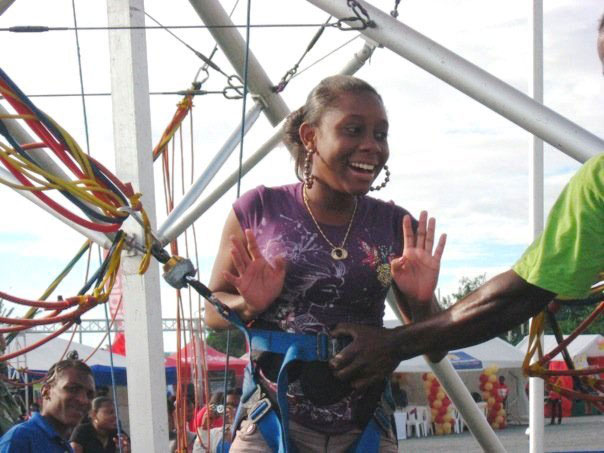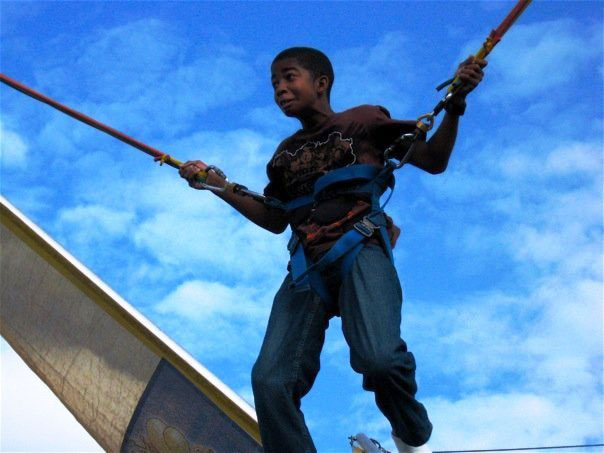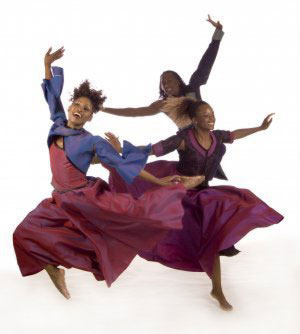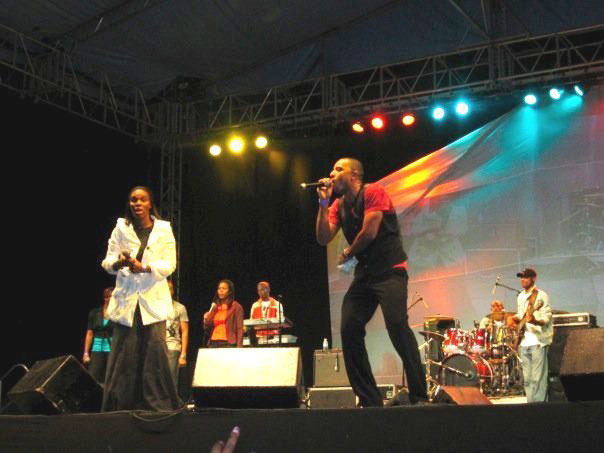
Because of You…

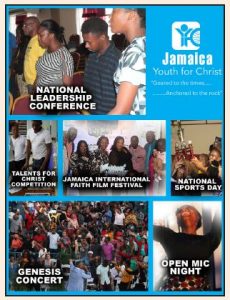
Youth for Christ is able to minister to youth on the entire island through:

  • sports clubs
  • youth counseling by phone and in person
  • Gospel films available to churches and other ministries
  • weekly meetings in a juvenile correctional center
  • Project Serve
  • Youth Guidance programs
  • Discover Jesus Mission – the evangelical outreach arm; a weekend evangelism event with speakers, music, and more, held in different cities each year.

Prayer Needs

  • Equipment for special events, such as buses, hand-held radios, sound systems
  • Adequate ministry resources, to include films and sports equipment.
  • Implementation of four youth leadership training seminars with Youth for Christ volunteers and church youth leaders
  • Implementation of six weekend evangelism outreaches across the nation

About Jamaica

Jamaica

Map of Jamaica

Introduction

The island - discovered by Christopher COLUMBUS in 1494 - was settled by the Spanish early in the 16th century. The native Taino Indians, who had inhabited Jamaica for centuries, were gradually exterminated and replaced by African slaves. England seized the island in 1655 and established a plantation economy based on sugar, cocoa, and coffee. The abolition of slavery in 1834 freed a quarter million slaves, many of whom became small farmers. Jamaica gradually obtained increasing independence from Britain. In 1958 it joined other British Caribbean colonies in forming the Federation of the West Indies. Jamaica gained full independence when it withdrew from the Federation in 1962. Deteriorating economic conditions during the 1970s led to recurrent violence as rival gangs affiliated with the major political parties evolved into powerful organized crime networks involved in international drug smuggling and money laundering. Violent crime, drug trafficking, and poverty pose significant challenges to the government today. Nonetheless, many rural and resort areas remain relatively safe and contribute substantially to the economy.

Geography

Location

Location: Caribbean, island in the Caribbean Sea, south of Cuba
Geographic Coordinates: 18 15 N, 77 30 W

Area

Total Area: 10,991 sq km Rank: 167
Land Area: 10,831 sq km
Water Area: 160 sq km
Comparison: slightly smaller than Connecticut
Land Boundaries: 0 km
Coastline: 1,022 km

Climate

tropical; hot, humid; temperate interior

Terrain

mostly mountains, with narrow, discontinuous coastal plain

Elevations

Lowest Point: Caribbean Sea 0 m
Highest Point: Blue Mountain Peak 2,256 m

Natural Resources

bauxite, gypsum, limestone

Land Use

Arable land: 15.83%
Permanent Crops: 10.01%
Other: 74.16% (2005)
Irrigated Land: 250 sq km (2002)
Renewable Water Resources: 9.4 cu km (2000)
Total Freshwater withdrawal (domestic/industrial/agricultural): 0.41 cu km/yr (34%/17%/49%)
Freshwater Withdrawal Per Capita: 155 cu m/yr (2000)

Environment

Natural Hazards: hurricanes (especially July to November)
Environmental Issues: heavy rates of deforestation; coastal waters polluted by industrial waste, sewage, and oil spills; damage to coral reefs; air pollution in Kingston results from vehicle emissions
Environmental Agreements: Party to: Biodiversity, Climate Change, Climate Change-Kyoto Protocol, Desertification, Endangered Species, Hazardous Wastes, Law of the Sea, Marine Dumping, Marine Life Conservation, Ozone Layer Protection, Ship Pollution, Wetlands

Geography Notes

strategic location between Cayman Trench and Jamaica Channel, the main sea lanes for the Panama Canal

People

Population: 2,825,928 (July 2010 est.) Rank: 138

Age Structure

0-14 years: 31.4% (male 451,310/female 436,466)
15-64 years: 61.1% (male 851,372/female 875,132)
65 years and over: 7.5% (male 94,833/female 116,815) (2010 est.)
Median Age: 23.4 years

Population Growth

Growth Rate: 0.755% (2010 est.) Rank: 144
Birth Rate: 19.68 births/1,000 population (2010 est.) Rank: 106
Death Rate: 6.43 deaths/1,000 population (July 2010 est.) Rank: 149
Net Migration Rate: -5.7 migrant(s)/1,000 population (2010 est.) Rank: 166

Urbanization

Urban Population: 53% of total population (2008)
Rate of Urbanization: 0.9% annual rate of change (2005-10 est.)

Life and Death

Infant Mortality Rate: 15.22 deaths/1,000 live births Rank: 125
Life Expectancy at Birth: 73.53 years Rank: 107
Fertility Rate: 2.21 children born/woman (2010 est.) Rank: 111

Health and Disease

HIV/AIDS - Adult Prevalence Rate: 1.6% (2007 est.) Rank: 40
People living with HIV/AIDS: 27,000 (2007 est.) Rank: 72
HIV/AIDS Deaths: 1,500 (2007 est.) Rank: 67

Nationality and Culture

Noun: Jamaican(s)
Adjective: Jamaican
Ethnic Groups: black 91.2%, mixed 6.2%, other or unknown 2.6% (2001 census)
Religion: Protestant 62.5% (Seventh-Day Adventist 10.8%, Pentecostal 9.5%, Other Church of God 8.3%, Baptist 7.2%, New Testament Church of God 6.3%, Church of God in Jamaica 4.8%, Church of God of Prophecy 4.3%, Anglican 3.6%, other Christian 7.7%), Roman Catholic 2.6%, other or unspecified 14.2%, none 20.9%, (2001 census)
Languages: English, English patois

Education

Literacy (age 15 and over has ever attended school): 87.9% Male: 84.1% Female: 91.6% (2003 est.)
School life expectancy (primary to tertiary education): 12 years Male: 11 years Female: 12 years (2003)
Education expenditures: 5.3% of GDP (2005) Rank: 56

Government

Country Name

Conventional Long Form: none
Conventional Short Form: Jamaica
Government Type: constitutional parliamentary democracy and a Commonwealth realm
Capital: Kingston Geographic Coordinates: 18 00 N, 76 48 W

Administrative Divisions

14 parishes; Clarendon, Hanover, Kingston, Manchester, Portland, Saint Andrew, Saint Ann, Saint Catherine, Saint Elizabeth, Saint James, Saint Mary, Saint Thomas, Trelawny, Westmoreland
Note: for local government purposes, Kingston and Saint Andrew were amalgamated in 1923 into the present single corporate body known as the Kingston and Saint Andrew Corporation
Independence: 6 August 1962 (from the UK)
National holiday: Independence Day, 6 August (1962)
Constitution: 6 August 1962
Legal system: based on English common law; has not accepted compulsory ICJ jurisdiction
Suffrage: 18 years of age; universal

Executive Branch

Chief of State: Queen ELIZABETH II (since 6 February 1952); represented by Governor General Dr. Patrick L. ALLEN (since 26 February 2009)
Head of Government: Prime Minister Bruce GOLDING (since 11 September 2007)
Cabinet: Cabinet is appointed by the governor general on the advice of the prime minister
Elections: the monarchy is hereditary; governor general appointed by the monarch on the recommendation of the prime minister; following legislative elections, the leader of the majority party or the leader of the majority coalition in the House of Representatives is appointed prime minister by the governor general; the deputy prime minister recommended by the prime minister

Legislative Branch

bicameral Parliament consists of the Senate (a 21-member body appointed by the governor general on the recommendations of the prime minister and the leader of the opposition; ruling party is allocated 13 seats, and the opposition is allocated 8 seats) and the House of Representatives (60 seats; members elected by popular vote to serve five-year terms)
Elections: last held on 3 September 2007 (next to be held no later than October 2012)
Election Results: percent of vote by party - JLP 50.1%, PNP 49.8%; seats by party - JLP 33, PNP 27

Judicial branch

Supreme Court (judges appointed by the governor general on the advice of the prime minister); Court of Appeal; Privy Council in UK; member of the Caribbean Court of Justice (CCJ)

Politics

Political Parties and Leaders: Jamaica Labor Party or JLP [Bruce GOLDING]; People's National Party or PNP [Portia SIMPSON-MILLER]; National Democratic Movement or NDM [Michael WILLIAMS]
Political Pressure Groups and Leaders: New Beginnings Movement or NBM; Rastafarians (black religious/racial cultists, pan-Africanists)
International Organization Participation: ACP, AOSIS, C, Caricom, CDB, FAO, G-15, G-77, IADB, IAEA, IBRD, ICAO, ICCt (signatory), ICRM, IFAD, IFC, IFRCS, IHO, ILO, IMF, IMO, Interpol, IOC, IOM, ISO, ITSO, ITU, LAES, MIGA, NAM, OAS, OPANAL, OPCW, PetroCaribe, RG, UN, UNCTAD, UNESCO, UNIDO, UNWTO, UPU, WCO, WFTU, WHO, WIPO, WMO, WTO
Flag Description: diagonal yellow cross divides the flag into four triangles - green (top and bottom) and black (hoist side and outer side); green represents hope, vegetation, and agriculture, black reflects hardships overcome and to be faced, and yellow recalls golden sunshine and the island's natural resources

Economy

Economy Overview: The Jamaican economy is heavily dependent on services, which now account for more than 60% of GDP. The country continues to derive most of its foreign exchange from tourism, remittances, and bauxite/alumina. Remittances account for nearly 20% of GDP, but have declined 15% since the onset of the Global recession. Tourism revenues account for 20% of GDP, and arrivals have remained strong, up 4% in 2009, although total revenues have declined due to discounts offered to retain visitors. The economy faces serious long-term problems: a sizable merchandise trade deficit, large-scale unemployment and underemployment, and a debt-to-GDP ratio of more than 130%. Jamaica's onerous debt burden - the fourth highest per capita - is the result of government bailouts to ailing sectors of the economy, most notably to the financial sector in the mid-to-late 1990s. The Government of Jamaica signed a $1.27 billion, 27-month Standby Agreement with the International Monetary Fund for balance of payment support in February 2010. Other multilaterals have also provide millions of dollars in loans and grants. The government's difficult fiscal position hinders spending on infrastructure and social programs, particularly as job losses rise in a shrinking economy. The GOLDING administration faces the difficult prospect of having to achieve fiscal discipline in order to maintain debt payments, while simultaneously attacking a serious and growing crime problem that is hampering economic growth. High unemployment exacerbates the crime problem, including gang violence that is fueled by the drug trade.

Gross Domestic Product

GDP (purchasing power parity): $23.8 billion (2009 est.) Rank: 114
GDP - real growth rate: -2.8% (2009 est.) Rank: 163
GDP - per capita (PPP): $8,400 (2009 est.) Rank: 116
GDP - Composition by Sector: Agriculture: 6% Industry: 30.1% Services: 63.9% (2009 est.)

Labor Force

Labor Force: 1.311 million (2009 est.) Rank: 135
Labor force - by occupation: Agriculture: 17% Industry: 19% Services: 64% (2006)
Unemployment Rate: 12.9% (2009 est.) Rank: 135

Poverty

Population below poverty line: 14.8% (2003 est.)

Transnational Issues

International Disputes: none

Want to know more? Show Full Profile